











The Ultimate Guide to Baby Dresse: Perfect Style, Comfort, and Quality


A baby dress is far more than just a piece of clothing; it represents comfort, safety, style, and essential care for your little one. Because a baby’s skin is incredibly sensitive, choosing the right outfit requires looking beyond beautiful designs. Parents must prioritize fabric quality, overall comfort, and breathable materials. Today’s market offers a wide variety of options, including casual wear, party wear, frocks, rompers, ethnic wear, and seasonal outfits. Understanding a few key factors will help you make the best and safest choice for your child.
Why the Right Choice Matters
Selecting the correct baby dress ensures your child’s absolute comfort, which directly influences their daily movement and happiness. Comfort always comes first; soft cotton fabrics minimize skin irritation and provide a cozy feel even during extended wear. Skin-friendly, breathable materials like organic cotton and muslin are ideal for keeping sweat away, ensuring the baby stays cool and refreshed. Furthermore, because infants and toddlers are constantly moving, dresses must allow for unrestricted crawling, walking, and playing.

Popular Types of Baby Dresses
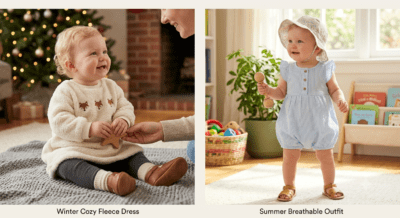
There are several practical and stylish categories of baby dresses available today. For everyday wear, casual cotton dresses are the most popular choice because they are lightweight and easy to wash. When it comes to birthdays, family gatherings, or special occasions, premium party dresses featuring elegant embroidery or lace are excellent choices. Rompers stand out as one of the most practical options for younger babies because they are incredibly comfortable and easy to put on. Finally, seasonal dresses—such as lightweight cotton for summer and fleece or wool blends for winter—keep babies perfectly adapted to the changing weather.

How to Select and Safely Choose the Best Dress
Finding the perfect dress involves balancing size, fabric, and safety features. While it is tempting to buy larger sizes for future use, oversized clothes can trip a baby or restrict their movement, so finding the right fit is crucial. Always inspect the material to ensure it is premium quality and gentle on sensitive skin. Additionally, look for outfits with functional buttons, zippers, or snap closures to make dressing and diaper changes quick and effortless. Most importantly, avoid clothes with loose beads, sharp accessories, or small decorative items, as these pose serious choking hazards.

The Best Fabrics and Modern Fashion Trends
The choice of fabric dictates the overall quality of a baby dress. Standard cotton remains the most recommended material because it is soft, highly breathable, and easy to clean. Organic cotton offers an even safer, chemical-free alternative, while muslin is exceptionally lightweight and perfect for hot weather. For the colder months, fleece is the go-to fabric to keep babies warm and snug. In terms of modern fashion, current trends lean toward delightful floral prints, beloved cartoon characters, soft pastel colors, minimal designs, neutral shades, and even matching family outfits that make your little one look incredibly stylish.

Essential Washing Tips and Mistakes to Avoid
Maintaining proper hygiene for baby clothes is just as important as buying them. To protect your baby’s skin, always use a mild, baby-friendly detergent rather than harsh chemical alternatives. It is best to wash baby dresses separately from adult laundry to prevent the spread of bacteria, and drying them thoroughly in the sun helps naturally eliminate germs while keeping the fabric fresh. When shopping, parents should actively avoid buying clothes that are too tight, made of low-quality or skin-irritating fabrics, feature overly heavy designs, or have poor stitching.

Conclusion and Buying Checklist
Investing in a high-quality baby dress offers long-lasting durability, excellent value for money, a stylish appearance, and ultimate peace of mind regarding your baby’s skin health. Whether you are shopping online or offline, always verify the fabric material, check the brand’s specific size chart, read customer reviews, evaluate the stitching quality, and review the return policy. Ultimately, choosing a baby dress is about supporting your child’s healthy growth and comfort. Prioritizing premium, breathable materials ensures your little one stays happy, smiling, and comfortable all day long.